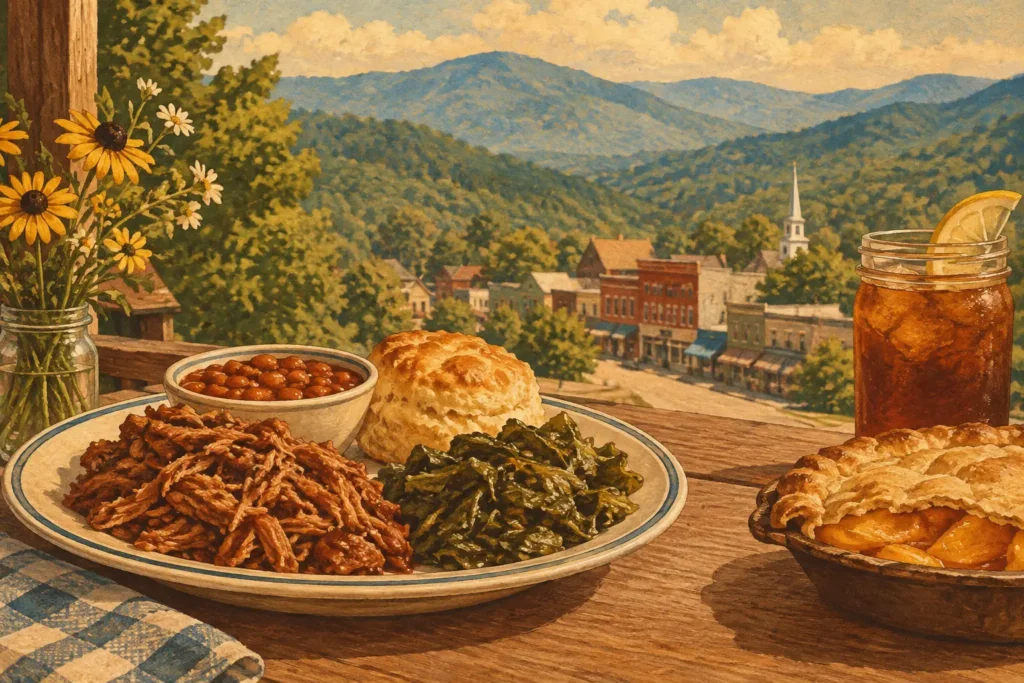
A good guide to regional foodways does not begin with a list of dishes. It begins with a question: who made this, and what does it tell us about the place? In West Jefferson, a bite can lead to a farmer’s field, a family recipe, a downtown storefront, or an old building with more stories than its brick exterior lets on.
That is the pleasure of eating your way through this little Appalachian town. Food is satisfying, of course. But it is also evidence. It shows what people have grown, traded, preserved, celebrated, and shared with neighbors for generations. Pay attention, and lunch becomes a map of West Jefferson.
What Foodways Actually Mean
“Foodways” may sound like a word that belongs in a museum label, but it is much friendlier than that. It simply means the habits, traditions, ingredients, skills, and stories that shape how a community eats.
A regional foodway includes the obvious things: local ingredients, familiar dishes, and recipes handed down at family gatherings. It also includes the less obvious parts. Who owns the restaurant? Where did they learn to cook? Why does a certain ingredient show up on tables here? What changed when highways, railroads, tourism, or new neighbors arrived?
In the High Country, foodways are shaped by mountain weather, self-reliance, family gardens, livestock, preservation, and the resourcefulness that comes with making the most of what is nearby. That does not mean every meal is a history lesson, nor should it be. It means a bowl, biscuit, sandwich, or sweet treat can carry a little more meaning once you know where to look.
A Guide to Regional Foodways Starts With Place
West Jefferson sits in Ashe County, where the landscape has always had a say in the pantry. Cool growing seasons, rolling farmland, and the rhythms of the mountains influence what can be raised and when. Apples, greens, beans, corn, dairy, pork, and seasonal produce are not abstract Appalachian symbols here. They are part of the local conversation.
Still, regional food is not frozen in time. A town’s foodways should not be treated like a costume from the past. West Jefferson’s independent businesses bring new ideas to old ingredients, and newer residents add their own tastes and traditions to the table. You may find a familiar Southern comfort food prepared with a fresh point of view, or a menu that reflects both mountain roots and a chef’s travels.
That mix is the point. Foodways are living things. They change with the people who cook, grow, sell, and gather around the food.
Look for the Local Details
When you sit down downtown, notice the details that have a local accent. A menu might mention an Ashe County farm. A seasonal special may make use of what is coming in from nearby fields. A dessert recipe may have the sturdy, generous character of something designed to be shared after a long day.
Ask a simple question when it feels right: “What do people around here order?” Not every answer will be dramatic. Sometimes the answer is a practical favorite, a sandwich regulars have loved for years, or a pie that disappears early. Those small answers are often the best ones. They tell you what a community returns to.
The People Behind the Plate Matter
A meal tastes different when you know the person behind it has a name, a point of view, and a stake in the block outside the door. In a downtown like West Jefferson, independent owners and makers help give the food scene its personality. They are often the people opening up early, staying late, remembering familiar faces, and helping a visitor feel less like a visitor.
This is why the best food experiences do not feel like a scavenger hunt for trendy dishes. They feel like a conversation. The person serving your coffee may know which mural you passed on the way in. The baker may have a favorite local story. The shop owner next door may point out a detail in a historic building that you would have missed completely.
Food is the doorway. The people are what make you want to step through it.
Eat With Your Eyes Up
West Jefferson’s downtown asks you to slow your pace between bites. Murals bring color and character to the streets, turning ordinary walls into little invitations to linger. They are not background decoration. They reflect local imagination, working lives, mountain scenes, and the artists who have helped make downtown a visual storybook.
Then there are the buildings. Take the Old Hotel, for instance. Its presence is a reminder that a downtown is never just a collection of businesses operating in the present tense. A building like that has seen changing travelers, changing commerce, and changing ideas of what people came to town for. Stand nearby with something delicious in hand, and it is easy to imagine the many meals, conversations, arrivals, and departures that have played out along the same streets.
You do not need to know every date to feel the history. Sometimes it is enough to notice the scale of an old doorway, the wear of a stair, or the way a building seems to hold its ground while the town keeps adding new chapters.
Let Music Set the Pace
Appalachian food and music share something useful: both are often passed along person to person. A tune changes a little from player to player. A recipe does too. One cook adds more pepper, another folds in a family preference, and before long the dish belongs to the people who keep making it.
When music is part of the atmosphere downtown, it can make a meal feel like more than a stop on an itinerary. It gives the town a rhythm. Listen for it, whether it is coming from an event, a nearby gathering, or simply the local culture that has long valued a good song and a good story.
How to Taste West Jefferson More Thoughtfully
There is no need to turn lunch into homework. A little curiosity goes a long way. Start with one local business rather than trying to cover every option in a single afternoon. Order something that sounds like the place, then leave room to wander afterward.
If you are visiting with family or friends, share a few things when you can. Sharing creates conversation, and conversation is where food stories tend to surface. Someone may remember a similar dish from childhood. Someone else may spot a name on a menu or a detail in a mural that sends the group down a pleasant rabbit hole.
It also helps to be patient with the pace of a small town. Independent kitchens and shops are not built to operate like a highway exit. That is not a flaw. It is part of the trade-off for eating somewhere with a human scale, where the person making your food may also be the person who chose the local ingredients, painted the sign, or knows the history of the building.
For visitors who want a little structure without losing the fun of discovery, High Country Food Tours brings together tastes and downtown stories in one walkable experience. The real goal is not to rush from stop to stop. It is to come away seeing West Jefferson with sharper eyes.
Take the Story With You
Regional foodways are not souvenirs you can tuck into a bag. They are better than that. They give you a way to remember a place through flavor, people, sounds, and small observations that stay with you after the trip.
So after your next bite in West Jefferson, do not head straight for the car. Look down the block. Notice the mural around the corner, the old brickwork, the shop window, the mountains in the distance. Ask one more question. The town may answer with a story you did not expect.