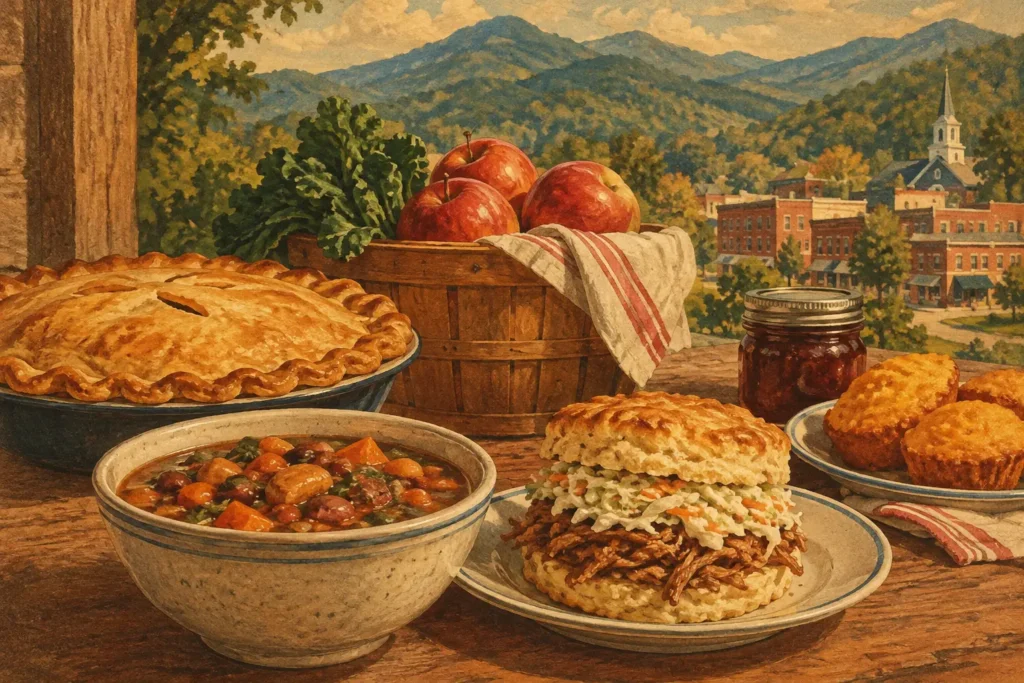
The first clue that West Jefferson takes food personally may be a wedge of cheese, a biscuit wrapped in wax paper, or the smell of coffee drifting down a downtown block. These five local food traditions are not a checklist of things to eat. They are small, delicious ways to notice how this mountain town works: who grows things, who gathers, who remembers, and who still has time to tell you a story.
West Jefferson is easy to enjoy at street level. The storefronts are close together, murals give old brick a second life, and a turn down one block can reveal a gallery, a music room, or a place where somebody knows exactly how you take your coffee. Food gives visitors a reason to pause. The pause is where the town begins to introduce itself.
Five Local Food Traditions That Tell a Town Story
1. Ashe County cheese is more than a souvenir
In Ashe County, cheese belongs on the table, in the picnic basket, and in the car ride home. It is one of those foods that locals mention without ceremony because it has long been part of the landscape. A good piece of local cheese can be simple, but it carries the larger story of dairy farms, green pastures, mountain weather, and the practical knowledge needed to turn fresh milk into something that lasts.
That last part matters in the High Country. Before refrigerated cases and easy shipping, preserving food was not a hobby or a fancy menu idea. It was common sense. Cheese was a way to make the abundance of one season useful in another. Today, it is still a tasty introduction to the agricultural backbone of this area.
Try it without overthinking it. Pair a sharp slice with an apple, tuck it into a sandwich, or bring some along for a Blue Ridge Parkway picnic. Then look beyond the label. In a place like West Jefferson, food often points back toward the farms just beyond town limits.
2. Garden food follows the mountain calendar
Mountain gardens do not answer to a big-city produce schedule. A late frost can make people nervous, a warm stretch can change the pace of planting, and summer abundance arrives with the cheerful problem of too many tomatoes, beans, and squash at once.
That is why beans cooked low and slow, skillet cornbread, fried squash, ripe tomatoes, and bowls of greens feel so rooted here. These are foods shaped by what a garden gives, not by what a trend predicts. They also reward cooks who know that a little patience, a well-seasoned pan, and something from the porch or patch can carry a meal a long way.
Visitors sometimes expect Appalachian food to be heavy all the time. It can be comforting, certainly, but garden cooking is also bright and seasonal. A tomato in late summer needs very little help. Green beans become a family argument in the best way: everybody has an opinion about how long they ought to cook.
If you visit when the growing season is in full swing, keep an eye out for produce stands and local menus that make room for what is arriving now. The lesson is not to chase a particular dish. It is to eat with the season and let the mountains set the menu.
3. Preserving the harvest is a form of hospitality
Open an Appalachian pantry, and you may find evidence of summer waiting patiently for winter. Pickles, jams, apple butter, chow chow, and canned vegetables are not merely colorful jars. They are reminders that people here learned to plan ahead.
Preserving has always had a practical side, but it also has a neighborly one. A jar of something homemade is easy to carry across a yard, set on a table, or send home with a guest. It says, in the plainspoken way good food often does, “I thought you might like this.”
Apples have a special place in that story. The cool elevations around West Jefferson have long made the High Country feel like apple country, and apple butter still brings a little bit of autumn to toast, biscuits, or a stack of pancakes. It takes time to make it well. That is part of the point. Stirring, tasting, and waiting are not always efficient, but they make room for conversation.
This tradition is a useful way to see the town’s history, too. West Jefferson’s old buildings have watched generations make do, make plans, and make meals stretch. Even the Old Hotel invites that kind of wondering. Who came through its doors hungry after a long trip? What was served in its busy years? History is often easier to imagine once you picture a kitchen nearby.
4. Biscuits make room at the table
A biscuit is a modest thing until you meet one done right: a browned top, tender middle, and enough butter to make the napkin work overtime. In these mountains, biscuits belong to breakfast, supper, church gatherings, family visits, and the familiar question, “Did you get enough to eat?”
The tradition is not really about chasing perfection. Every cook has a method, and every family has a preference. Some favor lard, some butter, some a particular flour, and some will tell you the secret is a light hand, then decline to explain what that means. The variations are part of the fun.
A biscuit also makes a good partner for local flavors. It can hold country ham, sausage gravy, eggs, cheese, apple butter, or a spoonful of jam. That flexibility explains its staying power. It is everyday food with a talent for showing up when people gather.
When you sit down to a biscuit in or around West Jefferson, notice how quickly food becomes conversation. Someone may mention their grandmother’s pan, a favorite breakfast stop, or the proper way to split one. There is no official answer, thankfully. The good answer is the one that gets shared.
5. Coffee, music, and a downtown table keep the conversation going
Not every local food tradition begins in a garden or a cast-iron skillet. Some begin when someone walks into downtown for coffee and stays longer than planned. West Jefferson has the kind of main street where a quick stop can become a chat about a new mural, a musician playing nearby, or a building whose past is more interesting than its facade first suggests.
Coffee shops and casual tables matter because they give the town a living room. They create space for artists, regulars, visitors, business owners, and friends to overlap. You might come in for something warm and leave with a recommendation for a gallery, a tip about a backstreet view, or a story about someone who helped paint color into downtown.
That connection between food and culture is especially visible when music is in the air. Appalachian music has always traveled through porches, kitchens, churches, dance floors, and community gatherings. A meal before a show, a sweet treat after one, or coffee shared while listening to a local musician all feel like small versions of the same tradition: people making time to be together.
It depends on the day, of course. West Jefferson can be lively, quiet, sunny, foggy, full of weekend visitors, or pleasantly unhurried. That is not a flaw in the experience. It is part of a real town’s rhythm. Let the day give you an opening, then follow it.
Eat Slowly Enough to Notice West Jefferson
The best way to experience these traditions is not to race from one bite to the next. Start with one food that catches your attention, then ask a question. Where did this recipe come from? Who makes it? What used to be in this building? Which mural should you see before heading home?
High Country Food Tours is built around that kind of curiosity: food as the doorway, West Jefferson as the story. But you can carry the idea with you anytime you walk downtown. Look up at the old brick, listen for music, notice what is growing, and save room for one more stop. Around the next corner, somebody may be ready to tell you why it matters.