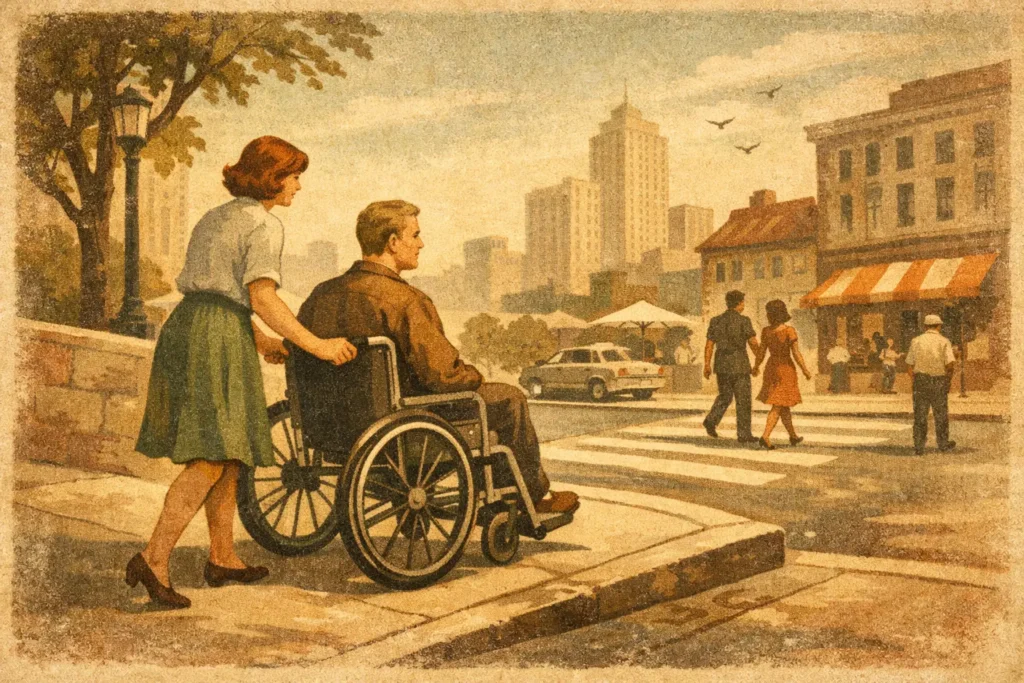
A downtown food tour should feel like a relaxed afternoon of good bites, Appalachian stories, murals, and friendly conversation – not a guessing game about curbs, doors, or where to take a break. So, are downtown walks wheelchair accessible? The honest answer is that accessibility depends on the specific route, the businesses visited, and each guest’s needs.
In downtown West Jefferson, many of the pleasures are close together: independent shops, colorful public art, welcoming places to eat, and mountain-town views around the next corner. That compact setting can make a downtown outing appealing for guests who use wheelchairs or other mobility devices. Still, older small-town commercial districts have real variables, including sidewalk conditions, street crossings, building entrances, restroom layouts, and changes in grade.
The best plan is not to assume. Ask clear questions before you arrive, and give your host enough information to help shape a comfortable experience.
Are Downtown Walks Wheelchair Accessible in West Jefferson?
A walkable downtown and a fully accessible downtown are not always the same thing. A route may be short while still including a steep section, a narrow doorway, uneven pavement, or an entrance with a small lip. A restaurant may have accessible seating but a restroom that is harder to use. Weather can also change the experience, especially after rain or during colder mountain months.
For a guided outing, accessibility also involves the pace of the group. A thoughtful tour allows room to move comfortably, enjoy tastings while seated when possible, and pause for the history and art that make West Jefferson more than a place to grab lunch. The goal is for every guest to spend their attention on the food and stories, not on trying to keep up.
Because individual needs differ, the most useful question is not simply, “Is it wheelchair accessible?” Instead, ask whether the route works for your particular chair, mobility device, stamina, and comfort level. A manual chair, power chair, scooter, walker, and companion-assisted outing can each call for different considerations.
What to Ask Before Booking a Downtown Walking Tour
A quick conversation before reserving can prevent surprises. Share the details that matter most to you, such as the width and turning needs of your wheelchair, whether you need step-free entrances, your preferred walking pace, and whether an accessible restroom is essential during the tour.
It also helps to ask about the full route rather than only the meeting location. Find out how far the group travels between stops, whether any crossings or slopes are part of the route, and whether all tasting locations can be entered without stairs. If there is a stop that does not fit your needs, ask whether the experience can be adjusted or whether a tasting can be enjoyed outside, at a nearby accessible spot, or through another arrangement.
For guests joining High Country Food Tours, letting the host know about mobility needs before booking is the kindest approach for everyone. Small groups allow more personal attention, but advance notice gives the team the best chance to confirm each location and plan a route with care. It is far easier to make a good plan ahead of time than to solve an access issue at a busy doorway on tour day.
Questions Worth Bringing Up
When you call or email a tour operator, focus on practical details:
- Is the entire route step-free, including every tasting stop?
- How many blocks and street crossings are included, and are there notable hills or uneven surfaces?
- Are accessible restrooms available along the route?
- Can the group pause or spend more time seated at tasting locations?
- What is the rain plan, and could wet weather make part of the route harder to travel?
These questions are not an inconvenience. They help a local host deliver the hospitable, unhurried afternoon you came for.
Sidewalks, Streets, and the Mountain-Town Factor
Downtown West Jefferson has the kind of character people come to the High Country to find: historic storefronts, locally owned businesses, artwork, and streets that invite wandering. That character can include older infrastructure, so it is wise to look beyond a map that simply labels an area “walkable.”
Sidewalk width matters when a group passes another group, outdoor seating, sandwich boards, planters, or parked vehicles near curb cuts. Surface condition matters, too. Brick, patched pavement, drainage grates, and seasonal leaves can feel very different in a wheelchair than they do on foot. A route that feels easy for one guest may require more energy or assistance for another.
Elevation deserves an honest mention in the North Carolina High Country. Even in a compact downtown, a short incline can be meaningful, particularly for a manual wheelchair user. Ask whether the route can avoid the steepest blocks or be arranged to travel downhill rather than uphill where possible. If a companion is assisting, consider whether they are comfortable with the grade and distance as well.
There is no prize for pushing through a route that does not feel good. A well-paced afternoon with generous food, a few memorable stories, and time to enjoy the murals beats an exhausting attempt to see every block.
Accessibility Inside the Tasting Stops
The sidewalk is only the first part of the experience. Each business has its own layout, and historic buildings can vary widely. Look for information about entrance thresholds, door width, indoor turning space, table height, counter service, and restroom access.
Seating can be especially important on a food tour. Guests may prefer to remain in their own chair at a table rather than transfer to a fixed seat. Others may need a chair removed so they can sit with the group. A host can often coordinate this easily when they know in advance, while a surprise request during a lunch rush may be harder for a small local business to accommodate.
Dietary needs and access needs sometimes overlap in the planning stage. If you need both a particular meal accommodation and a step-free route, mention both together. That gives the tour team a fuller picture and helps them avoid offering a tasty alternative at a location that is not workable for you.
Make the Day Comfortable, Not Just Possible
“Accessible” should mean more than technically getting from one place to another. A good outing leaves room for comfort, choice, and enjoyment. Bring what makes the day easier for you, whether that is a weather cover, water, a charging plan for a power chair, medications, or a companion who can help with doors and slopes.
Check the forecast before heading downtown. West Jefferson’s mountain weather can shift quickly, and rain can make surfaces slick while cooler temperatures can shorten the time some guests want to spend outdoors. A lightweight layer and a flexible attitude go a long way, but the tour operator should also be able to explain how weather affects the route.
Arriving a little early can take pressure off the start of the day. It gives you time to park, locate the meeting point, use a restroom if needed, and settle in before the first tasting. Ask about nearby accessible parking options and drop-off possibilities rather than assuming a space will be immediately available near the door.
If you are visiting with a multigenerational group, build in enough time afterward, too. One guest may want to browse a gallery while another is ready for a quiet coffee or a rest. Downtown West Jefferson is best enjoyed at a human pace.
A Welcoming Downtown Starts With a Conversation
Local businesses want visitors to feel at home, and specific information makes that possible. Be direct about what will make the route successful for you. In return, a good host should be direct about what they can confirm, what may be challenging, and what alternatives may be available.
That kind of conversation honors both the guest and the place. It recognizes that a historic Appalachian downtown is full of personality and possibility, while also acknowledging that no two buildings, sidewalks, or mobility needs are identical.
Bring your questions, share your needs early, and leave plenty of room for the best part of the day: tasting something delicious, hearing a story you would not find on your own, and enjoying West Jefferson’s downtown at a pace that lets you truly take it in.