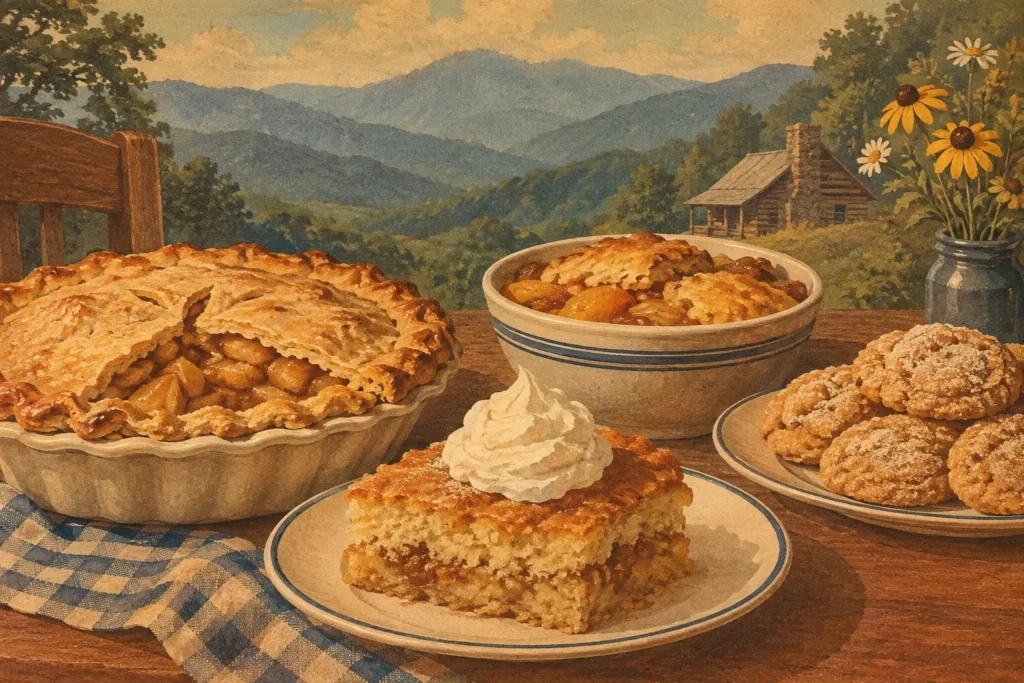
A slice of cake can tell you more than a recipe ever could. If you are wondering how to identify Appalachian desserts, start by looking past the sugar. These sweets often carry clues about the mountain pantry, the season outside, the person who made them, and the gathering that called for a little something extra on the table.
That does not mean every pie baked in the mountains is automatically an Appalachian dessert. Food traditions travel, families adapt, and a good recipe rarely stays still for long. But in West Jefferson and across the High Country, certain flavors, methods, and stories show up again and again. Once you know what to notice, a dessert menu becomes one more way to read the town around you.
How to identify Appalachian desserts: Start with the pantry
Many Appalachian desserts grew from practical kitchens. The ingredients were often what could be grown, preserved, traded for, or kept in a cupboard through winter. Apples, blackberries, peaches, sorghum, molasses, buttermilk, cornmeal, walnuts, and dried fruit all make sense in this setting. So do flour, eggs, and sugar, of course, but the character often comes from how those everyday ingredients are used.
Fruit is one of the clearest clues. A dessert made with apples is not necessarily Appalachian, but an apple dessert that tastes of a local harvest, apple butter, dried apples, or a well-worn family method begins to tell a more regional story. Around Ashe County, where changing seasons are felt in the fields, on the ridgelines, and in the farm stands, fruit desserts have a special way of making the calendar feel edible.
Look, too, for ingredients that add depth rather than flashy sweetness. Molasses brings a dark, almost smoky richness. Buttermilk gives pies and cakes a gentle tang. Sorghum adds a grassy, earthy note that feels right at home beside biscuits as well as baked goods. These are flavors with some backbone. They do not need a tower of frosting to make their point.
Notice the methods, not just the names
Appalachian baking is often associated with resourcefulness, and that shows up in technique. A dessert may be fried rather than baked, layered rather than elaborately iced, or made in a skillet that has seen plenty of suppers before it sees a sweet course. Crusts can be simple and sturdy. Cakes may be thin-layered and meant to soften as they rest. Cobblers and puddings can stretch a modest amount of fruit into enough dessert for a table full of people.
Consider the stack cake. It is sometimes introduced as a mountain curiosity, but it makes more sense when you think of it as a shared-food tradition. Thin cake layers are stacked with a fruit filling, often apple, and allowed to settle. The finished cake is not just about decoration. It is about time, patience, and having enough hands nearby to make an occasion of it.
Fried apple pies offer another useful clue. Their charm is not that they are fancy. Quite the opposite. A hand-held pie made from a simple dough and fruit filling is practical, portable, and generous in the way a good snack should be. Recipes vary wildly from one kitchen to another, which is part of the point. The shape may be familiar, but the cinnamon level, crust texture, apple variety, and frying method can all become family signatures.
Then there are cobblers, crisps, and fruit puddings. The names can shift from one household to the next, so do not get too hung up on labels. Ask whether the dessert lets the fruit lead, whether the topping is biscuit-like or batter-based, and whether it feels tied to what is in season. A blackberry dessert in summer has a different kind of local logic than a berry dessert made from a year-round freezer aisle.
The story matters as much as the sweet
Here is the tricky, interesting part: Appalachian food is not one single, sealed-off tradition. The region has been shaped by Indigenous foodways, African American cooks and farmers, immigrant communities, longtime mountain families, migration, industry, and the everyday exchange of recipes between neighbors. Calling something “Appalachian” should not erase those influences or turn a living culture into a costume.
A better question is, “What is the story behind this dessert?” Maybe the recipe came from a grandmother who dried apples for winter. Maybe it was served at a church supper, a reunion, a music gathering, or after a long day of work. Maybe a baker uses a traditional idea but adds a new flavor because that is what their customers love. Tradition and creativity are not enemies. In a real town, they usually share the same counter.
When someone tells you that a dessert is made from a family recipe, listen for the details. Which family member? What changed over the years? Was it made for holidays, company, or Tuesday night? Those small answers are often more revealing than a label on a menu.
Familiar desserts with a mountain accent
Some Appalachian desserts are easy to recognize by name, while others reveal themselves more quietly. Stack cake and fried apple pies tend to get the attention, but they are not the whole story. A molasses cookie with a crackly top, a buttermilk pie with a tender tang, or a simple apple cake can belong in the conversation, too.
Dried apple desserts are especially worth noticing. Before modern refrigeration made fresh fruit available in every season, drying was a sensible way to keep a harvest close. Rehydrated apples develop a concentrated flavor that is different from a fresh apple filling. If a baker mentions dried apples, apple butter, or fruit put up from a previous season, you are hearing an old pantry habit still doing useful work.
Walnuts, pecans, and other nuts can also point toward a dessert built around what was accessible nearby, though the exact nut depends on place and family. Cornmeal may appear in a cake or pudding, adding texture and a warm, grainy sweetness. And sometimes the mountain accent is simply restraint: a dessert that is not overly frosted, overly styled, or trying to be anything other than comforting.
In West Jefferson, read the streets along with the menu
West Jefferson makes a fine place to practice this kind of dessert detective work because downtown invites you to slow down. You may notice a painted wall before you notice a bakery window. You may pause near the Old Hotel and wonder who has passed through that building over the years, then find yourself talking with an owner who knows exactly where a recipe came from. That is how food becomes a doorway rather than the whole destination.
The murals, independent storefronts, galleries, and gathering spots downtown offer their own reminders that a town is made by people who keep making things. A dessert is part of that picture. It can reflect the local growing season, but it can also reflect a baker’s personality, a restaurant’s point of view, or a customer’s favorite memory.
If you are tasting your way through town, do not expect every menu to deliver a museum-piece version of mountain cooking. You may find a classic recipe, a modern riff, or a dessert that simply uses local ingredients well. All three can be worth your attention. The useful distinction is whether the food has a connection to place that someone can explain honestly.
Four questions to ask before you take the next bite
When a dessert catches your eye, give it a little friendly investigation. Ask what fruit or pantry ingredient is doing the real work. Ask whether it is tied to a season, a local farm, or a preserved harvest. Ask how it is made, especially if the method sounds handed down or practical. Finally, ask who makes it and why it belongs on their menu.
There is no need to quiz a busy server or turn dessert into homework. A simple, curious question is usually enough: “Is there a story behind this?” People who cook, bake, and serve food with care often enjoy sharing the answer.
The next time you are walking through West Jefferson, let the dessert case slow you down for a minute. Choose the pie, cookie, cake, or fried hand pie that makes you curious, then look around at the brick, the art, the old buildings, and the people keeping the block lively. You may find that the sweetest part is not only what is on the plate, but the little piece of town it helps you notice.