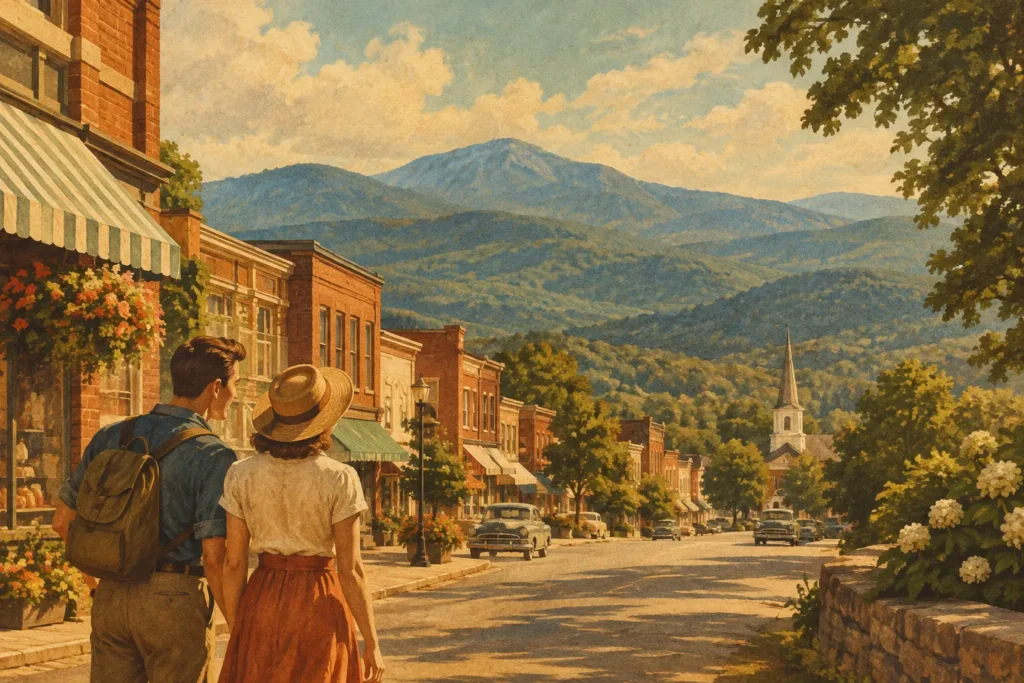
A downtown can tell you what it values before anyone says a word. In West Jefferson, a painted wall might introduce you to an artist. A storefront might lead to a conversation with its owner. The smell coming from a kitchen can point you toward a story that began long before lunch. That is the particular pleasure of small town travel here: it rewards people who are willing to slow down, look twice, and follow their curiosity around the next corner.
West Jefferson is not trying to be a big city in the mountains. That is a good thing. Its appeal is in the details – the independent businesses, the hand-painted murals, the old brick buildings, the people who know the names behind the signs. Come hungry, certainly. But leave room for a little wonder, too.
Why small town travel feels different here
Big trips often come with a long checklist. See the landmark. Stand in the line. Take the photo. Move on. A day in a smaller downtown has a different rhythm. You may arrive looking for a good meal and find yourself learning why a building has an unusual shape, who created the mural across the street, or where the music drifting down the block is coming from.
West Jefferson makes that kind of wandering easy. Downtown is walkable, which means the experience is not divided into separate errands: lunch over here, shopping over there, history somewhere else. A meal can lead into a gallery visit. A mural can send you into a shop. A local recommendation can change the rest of your afternoon.
That is also why a small town is not best treated as a quick pit stop between larger destinations. If you give it only fifteen minutes, you may see a pleasant main street. If you give it an afternoon, you begin to notice its personality.
Food is the doorway, not the whole story
Food matters in West Jefferson because it is made and served by people with roots in the community. A plate is never just a plate when someone can tell you where an idea came from, why a recipe matters, or how a business found its home downtown.
The most satisfying local meals carry a little context. Maybe the ingredients reflect the seasons of the High Country. Maybe the owner has restored an old space and given it a new purpose. Maybe a longtime local has a favorite order and a strong opinion about it. Those small pieces of information make a tasting more memorable than simply deciding whether something was delicious – though delicious is still a very fine place to start.
A guided walk with High Country Food Tours is one way to connect those dots. The food gives the afternoon a friendly structure, while the stories make the town feel less like a collection of addresses and more like a place with a living cast of characters. You do not need to be a serious foodie. You only need an appetite and a willingness to listen.
There is a trade-off, of course. A food-focused afternoon will not show you every corner of Ashe County, and a quick browse through downtown will not reveal every story behind its buildings. The goal is not to collect it all. It is to find a few things worth remembering, then have a reason to come back.
Look up: West Jefferson has stories on its walls
West Jefferson’s murals are more than colorful backdrops for vacation photos. They help turn an ordinary stroll into a scavenger hunt for local imagination. Some celebrate mountain life; others call attention to the people, traditions, and visual humor that make this town its own.
Take your time with them. Notice the artist’s name when it is displayed. Look at what has been included in the scene, and what may be quietly tucked into a corner. Public art is often the quickest way to understand what a community wants visitors to see – and what residents are proud to recognize.
Then look beyond the murals to the buildings themselves. Brickwork, upper windows, old signs, and narrow doorways can be easy to miss when you are focused on the next stop. Yet these are the pieces that hold the town together. West Jefferson has changed over time, as all real towns do, but it has not scrubbed away every trace of earlier chapters.
The Old Hotel and the art of noticing
The Old Hotel is a good reminder that a building does not have to shout to be interesting. Its name alone invites a few questions. Who stayed there? What would downtown have sounded like when travelers arrived by a different route and at a different pace? What conversations might have taken place through its doors?
You do not need every answer to appreciate the question. In fact, that is part of the charm. Historic places make small town travel richer when they encourage us to see a familiar-looking block as something more than a pretty row of buildings. They add a little mystery to the walk.
Let the town introduce you to people
West Jefferson is best experienced with room for unscripted moments. Step into an independent shop and ask what the owner loves about the neighborhood. Ask about the artist on a mural. If you hear music nearby, follow it. The answer may be simple, or it may open up a story you would never find on a map.
Local personalities matter because they keep a downtown from becoming a stage set. The person pouring a drink, arranging a display, cooking a favorite dish, or greeting customers by name is part of what visitors remember. These encounters do not need to be grand or polished. Often, the most endearing ones are a little offbeat: an unexpectedly detailed recommendation, a good-natured debate about a local favorite, a bit of history delivered while someone wraps up a purchase.
For families and multigenerational groups, this is especially useful. Not everyone needs to enjoy the same thing in exactly the same way. One person may be drawn to the food, another to the art, another to the old buildings, and another to the chance to sit down and hear a story. A walkable afternoon gives everyone a way into the experience.
How to make a day in West Jefferson feel like discovery
Start with enough time to be unhurried. A rushed visit tends to flatten a town into a few storefronts and a meal. Plan for a lingering lunch or tasting, a stretch of walking, and some time to follow what catches your eye.
Keep your phone handy for photos, but do not let it do all the looking. Put it away long enough to notice the sound of footsteps on the sidewalk, the painted details above a doorway, or the conversation at the next table. Those are the things that rarely make an itinerary and often become the reason a place stays with you.
It also helps to arrive with one question rather than a packed agenda. What is this building’s story? Which mural should I see first? Where do locals send friends who are visiting? Questions make better companions than checklists.
And when you find a place you like, stay a few minutes longer than necessary. Small towns are generous with their stories, but they do not always offer them all at once. Sometimes the next good part begins after you have finished the last bite.