A tomato picked on a hot July afternoon does not need much help. A sprinkle of salt, perhaps. A napkin, definitely. In the North Carolina High Country, that first bright, messy bite is also a clue: mountain produce has a story about weather, elevation, hard-working soil, and the people who know when to pick something instead of merely when to sell it.
If you are wondering how to sample mountain produce in West Jefferson, start with curiosity rather than a checklist. This is not a place to rush through a pile of perfect-looking fruit and call it local. Slow down. Ask what came in that morning, what is nearly gone for the season, and what the person behind the counter likes to take home.
Food is the doorway, after all. The real pleasure is noticing where that doorway leads.
Let the season choose your first bite
Mountain growing seasons have their own timetable. Cool nights can linger long after lower elevations have moved into summer, and a sudden stretch of rain can change what looks best at a farm stand. That makes seasonality more than a nice idea. It is your most useful guide.
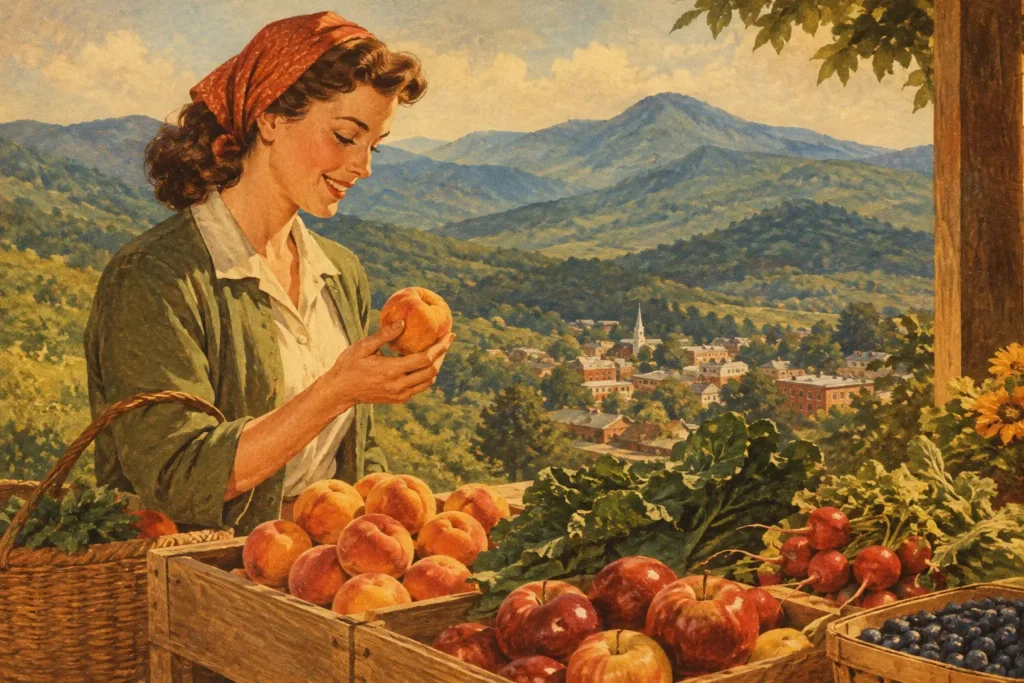
Spring may bring tender greens, radishes, asparagus, and herbs with a little peppery snap. Early summer often starts gently with berries, then gathers speed as beans, squash, corn, cucumbers, and tomatoes arrive. Late summer is when the table can feel downright crowded: peaches, melons, peppers, sweet corn, and the first apples all asking for attention. In fall, apples, winter squash, greens, potatoes, and sturdy roots take their turn.
The exact timing changes from year to year. That is part of the fun. Instead of arriving determined to find one specific thing, ask, “What is at its best right now?” It is the question that turns a casual purchase into a local conversation.
How to sample mountain produce without rushing it
A sample does not have to mean a tiny square of fruit handed over a counter. Sometimes it is a vendor slicing an apple. Sometimes it is a spoonful of jam made from a short-lived berry crop. Sometimes it is a dish at a downtown table where a cook has turned local squash, greens, or tomatoes into something that tastes like the season wearing its Sunday clothes.
Begin with one fresh, simple taste. Try a berry, a snap bean, a slice of apple, or a ripe tomato in a form that lets the ingredient speak for itself. Then try that same season through someone else’s hands: a preserve, a pickle, a baked good, a soup, or a plate prepared by a local kitchen. You learn a surprising amount from the difference.
Fresh produce tells you what the land gave. Preserves, pies, and pickles tell you what people have learned to do when the land gives plenty. Both belong to the same story.
There is a practical reason to start small, too. Mountain markets can be wonderfully tempting, and a car full of delicate berries is not always the wisest companion for an all-day outing. Taste first, buy what you can enjoy or carry well, then return for the thing you keep thinking about.
Ask the questions that make a stand feel like a visit
The best farm-stand conversations are rarely formal. You do not need to know the difference between every variety of apple or have strong opinions about heirloom tomatoes. A few honest questions will do the work.
Ask where the produce was grown and how far it traveled. Ask what is especially sweet, what needs to be eaten soon, or what a grower considers underrated. If you spot something unfamiliar, ask how they cook it at home. You may leave with a useful tip, such as roasting squash with a little butter and maple, sautéing greens with garlic, or letting a truly ripe peach stay completely unadorned.
You can also ask about the weather. It is not small talk here. A late frost, a wet spring, or a dry spell may explain why there are fewer berries than expected or why one crop is particularly good. Produce is a delicious weather report, and growers tend to be the people who can read it best.
Be mindful of the exchange. Sampling is an invitation, not a free lunch. If a vendor offers a taste, receive it warmly. If you find something you enjoy, consider buying a small bag, a jar, or a few pieces of fruit. Supporting the people who grow and make food keeps the local table interesting.
Follow the food into downtown West Jefferson
A basket of beans or a bag of apples may be the reason you stop, but West Jefferson gives you reasons to stay. Carry that sense of discovery into downtown, where independent businesses, painted walls, old storefronts, and familiar faces make the walk part of the meal.
Look up between bites. Downtown murals add color and character to the blocks, and they reward a slower pace. A meal can become a conversation about the artist who made a wall come alive, the shop owner who remembers another version of the street, or the music drifting from a nearby gathering. The town does not keep its stories behind glass. They show up in the everyday details if you give them a minute.
And then there is the Old Hotel. Its presence is a useful reminder that West Jefferson has been welcoming travelers for longer than any current menu has existed. Pause outside and imagine the arrivals, the conversations, the muddy shoes, the good news and bad news carried through its doors. Historic buildings make a town feel less like a backdrop and more like a continuing cast of characters.
That is why a food-focused afternoon here can feel larger than lunch. The tomato, apple, or jam is not the whole experience. It is an introduction to the growers, cooks, artists, and places that keep a small downtown distinctly itself.
Make room for the makers, not just the ingredients
When people talk about local food, they sometimes picture produce in isolation: neat baskets, handwritten signs, a cheerful photo. But mountain food culture is also about the hands in between. A baker may fold local fruit into a pastry. A cook may turn greens into a side dish that disappears before the main course arrives. A maker may preserve the flavor of a brief season in a jar so you can take a little of it home.
That does not mean every ingredient on every plate came from just down the road. Restaurants and shops have real-world constraints, and seasons do not last forever. The better question is whether a place pays attention to what grows nearby when it is available, and whether the people serving you can speak honestly about what they make and why.
That honesty is worth seeking out. It makes the food more interesting, even when the answer is, “Not this week.” A town with a real food culture is not one that pretends everything is local all the time. It is one where people notice the season, know their neighbors, and make good use of what is in front of them.
Build a tasting route with breathing room
Give yourself permission to wander. Start with a seasonal bite or a market stop, then take time to walk downtown before choosing your next taste. Notice the storefront windows. Step closer to a mural. Ask about a building that looks like it has seen a few things. Save room for a prepared dish or a sweet finish later on.
For visitors who would rather have the stories gathered in one easygoing afternoon, High Country Food Tours offers a way to taste downtown while getting to know the people and places behind the plate. It is less about cramming in as many stops as possible and more about seeing West Jefferson with a local host’s attention to detail.
The best souvenir may be a bag of apples, a jar of something bright and tangy, or a new idea for dinner. But leave a little room for another kind of souvenir, too: the name of a grower, the face of a maker, a mural you want to photograph again, or the feeling that one bite made you wonder what is around the next corner.