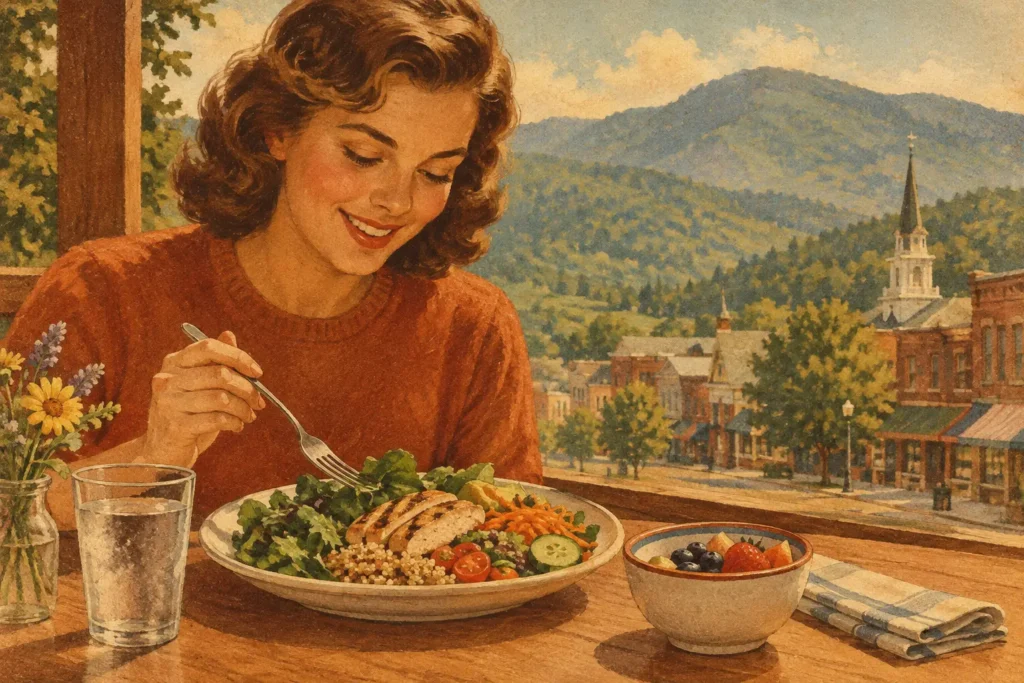
A downtown food tour should feel like an invitation, not a guessing game. That is why tour dietary accommodations matter long before the first tasting arrives on the table. In West Jefferson, the food is a doorway to the people, old storefronts, murals, and small surprises that make a walk downtown feel like a real discovery. Everyone deserves a fair chance to step through that doorway.
Maybe you avoid gluten. Maybe dairy gives you trouble. Maybe you are vegetarian, vegan, managing diabetes, allergic to nuts or shellfish, or traveling with someone whose meal planning takes a little more care. None of that should make you feel like the awkward person in the group. It simply gives your host and participating businesses useful information to work with.
The key is communication – early, specific, and practical. A thoughtful food tour can often make adjustments, but a tour is different from sitting down at one restaurant and ordering from a full menu. Tastings are planned across several stops, kitchens may be small, and each local business has its own ingredients, preparation methods, and limitations.
Why tour dietary accommodations need advance notice
Did you know that a small tasting can have a surprisingly long backstory? A biscuit may come from a family recipe. A sauce may be made in a shared kitchen. A dessert that looks simple may contain butter, eggs, wheat, or nuts in more than one form. The people preparing your food want to get it right, but they need time to check labels, set aside an alternative, or tell the tour host what is realistically possible.
Advance notice gives a food tour the best chance to create a satisfying experience rather than making a hurried substitution on the sidewalk. It also helps protect the rhythm of the tour. Nobody wants a group standing outside a shop while someone races to solve a food question that could have been answered a few days earlier.
For guests with severe allergies or celiac disease, advance notice is especially essential. A restaurant may be able to offer an item without a particular ingredient while still using shared equipment, fryers, work surfaces, or storage areas. “Gluten-free” and “safe for celiac disease” are not always the same promise. The same goes for nut, dairy, shellfish, and other allergens.
A good host will be candid about that distinction. Clear information is more welcoming than a vague assurance. If cross-contact is a concern, share that plainly so the tour team can ask the right questions and help you decide whether the experience is a fit.
What to share before your West Jefferson food tour
The most helpful note is short but specific. Rather than saying, “I have food restrictions,” name the restriction and the level of concern. For example: “I am vegetarian and eat eggs and dairy,” “I need to avoid gluten because of celiac disease,” or “I have a severe tree-nut allergy and need to know about cross-contact.”
It also helps to mention foods you can eat with confidence. If you are dairy-free but enjoy meat, vegetables, and corn-based dishes, that opens more options than a simple “no dairy” note suggests. If you are vegan, say whether honey is included in that preference. If you are following a low-sodium or low-sugar eating plan, explain whether you need strict substitutions or would prefer smaller portions at certain stops.
There is no need to apologize for asking. You are not being difficult. You are helping the people feeding you do their work thoughtfully.
A note about preferences versus medical needs
Both matter, but they may be handled differently. A strong dislike of mushrooms is useful for a host to know, especially when an alternative is easy. A life-threatening allergy requires a different conversation about ingredients and kitchen practices.
Being honest about the difference helps everyone. It allows local businesses to focus their care where it is most needed and avoids promising a complete substitution when one may not be available that day.
The trade-off: flexibility makes a better day
Food tours are a little like West Jefferson itself: part planning, part happy surprise. You may taste something made by an independent owner who is cooking in a compact kitchen, serving a seasonal special, or working with what arrived fresh that morning. That is part of the charm, but it also means accommodations can vary from stop to stop.
Sometimes the best alternative is an adjusted version of the featured tasting. Other times it may be a completely different bite that still reflects the spirit of the place. A vegan guest may receive a thoughtfully prepared savory option while others sample a cheese-forward dish. A gluten-sensitive guest may enjoy a naturally gluten-free tasting at one stop and skip a baked item at another.
That does not mean the day becomes less interesting. The point is not to duplicate every bite perfectly. The point is to share the stories, meet the makers, notice the details, and enjoy enough delicious food to feel included in the experience.
If your restriction is very strict, you may want to bring a small backup snack. That is not a failure of hospitality. It is simply good travel sense, particularly in a small mountain town where independent kitchens make food with care but may not have the inventory or dedicated facilities of a large chain restaurant.
Food is only one part of the table
A tasting may be the reason a group gathers, but it is rarely the only thing they remember. They remember the painted walls downtown and the artist behind a mural. They remember learning that a familiar-looking building once had another life. They remember hearing a story about the Old Hotel and looking at its windows a little differently afterward.
That is especially true when a guest has dietary needs. A great tour does not reduce anyone to what they cannot eat. There is still the walk from one stop to the next, the scent of coffee drifting from a doorway, the local character who knows the history behind a counter, and the pleasure of sharing a town with people who arrived as strangers an hour earlier.
West Jefferson rewards that kind of attention. Its downtown is compact enough to explore on foot but layered enough to keep revealing itself. A meal can lead to a maker. A maker can lead to a story. A story can send you back down the block to look again at a brick facade, a mural, or a shop window you almost passed by.
Questions worth asking before you join
Before reserving, ask whether the tour can accommodate your particular dietary need, how much notice is needed, and whether the team can speak to ingredient and cross-contact concerns. If you are traveling with children, it is also reasonable to ask about portion sizes and whether a selective eater can be accommodated.
Be prepared for an honest “it depends.” Availability may change with the participating stops, seasonal menus, or the seriousness of an allergy. A responsible answer may be, “We can offer alternatives at several stops, but we cannot guarantee an allergen-free environment.” That information gives you the power to choose comfortably.
If the tour can accommodate you, confirm the details when you reserve and mention them again when you arrive. A quick, friendly reminder helps the host connect your name with the plan. If something seems unclear at a tasting stop, ask before taking a bite. Local business owners would much rather answer a question than have you worry quietly.
A welcome that has room for everyone
Sharing food is one of the oldest ways people get acquainted, and it does not require everyone to eat the exact same thing. What matters is that each guest is considered, informed, and welcomed into the larger experience.
High Country Food Tours sees food as the beginning of the conversation, not the whole conversation. With a little advance planning, dietary needs do not have to keep you on the sidelines of that conversation. They can simply become one detail in a day filled with local flavor, downtown stories, and a few corners of West Jefferson you might not have found on your own.
Bring your questions, share what you need, and leave room for a little curiosity. The next good story may be waiting just past the next tasting.