A downtown lunch can be more than a decision between sandwiches, sweets, or a local favorite. To combine art, food, and history is to experience West Jefferson with all your senses: the aroma coming from an independent kitchen, the color of a mural around the corner, and the stories held by the buildings beneath the Blue Ridge sky.
That combination is what makes a walk through downtown feel personal. You are not just passing storefronts or checking off places to eat. You are learning why a small Appalachian town looks, tastes, and feels the way it does – one generous bite and one memorable stop at a time.
Why combine art, food, and history?
Food tells you what people make time for. A hometown bakery, a kitchen using regional ingredients, or a welcoming café can say a great deal about the people who live and work nearby. It offers a taste of everyday community, not just a meal designed for visitors.
History gives those flavors a setting. West Jefferson’s downtown streets, longtime businesses, and changing storefronts reflect a town shaped by hard work, creativity, and a deep connection to the North Carolina High Country. When someone shares the stories behind a landmark or a local tradition, the town becomes easier to understand and easier to remember.
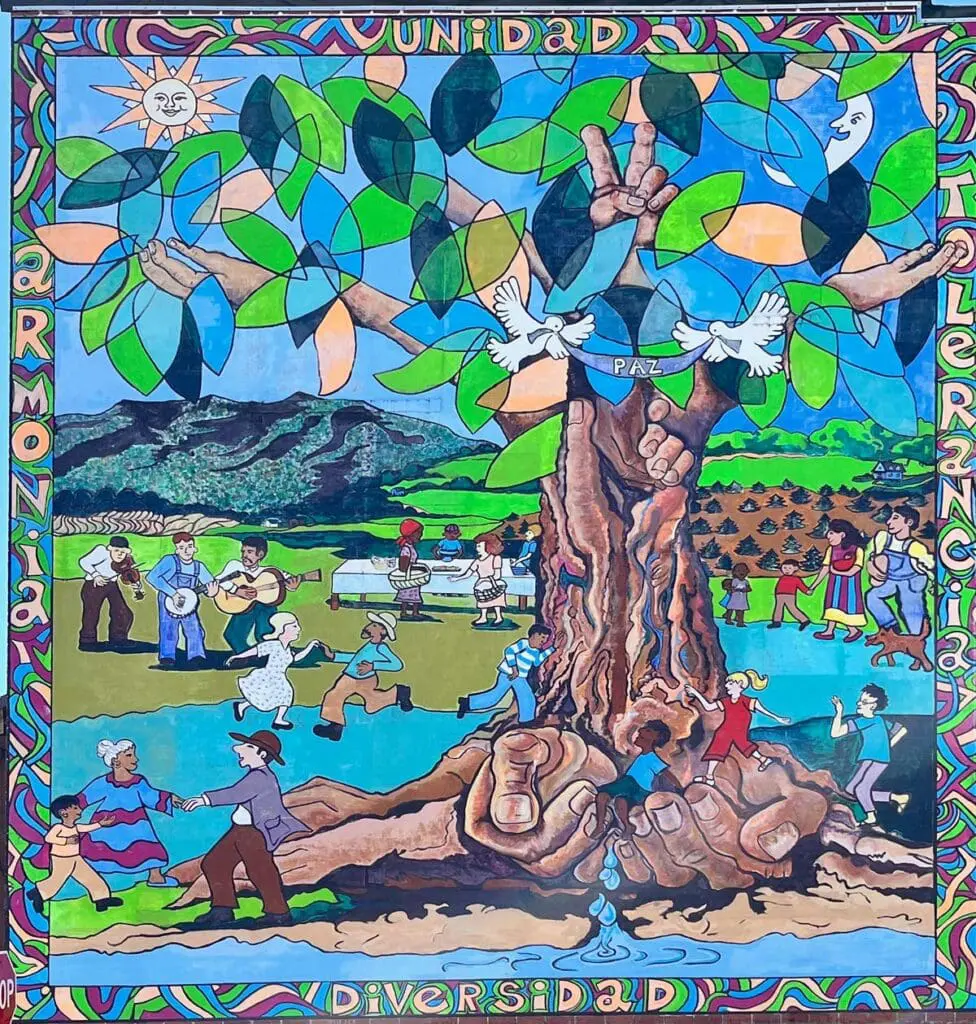
Art brings another layer of personality into view. Public murals can turn an ordinary stroll into a gallery walk, adding color, humor, local pride, and a fresh way to see a familiar block. Some murals celebrate mountain life or local heritage. Others invite you to pause, look closer, and notice details you might have missed while looking for your next bite.
Put all three together and a casual afternoon becomes a fuller travel experience. It works especially well for visitors who do not want to spend hours researching where to go, as well as locals looking to see their own downtown with new eyes.
A meal is a good place to begin
There is a practical reason food belongs at the center of a downtown outing: everyone needs lunch. But a tasting experience does more than solve the question of where to eat. It creates natural pauses in the day, gives people something to talk about, and makes room for stories between stops.
A generous tasting can introduce a visitor to dishes they might not have ordered on their own. It may also point them toward a shop, restaurant, or specialty item they will want to revisit later. For families and friend groups, sharing a few different flavors is often more fun than trying to agree on one menu before anyone has had coffee.
The best food experiences also make room for the people behind the counter. Independent businesses are part of what gives a small downtown its character. Their recipes, hospitality, and small details help distinguish West Jefferson from a highway exit where the same restaurants appear in every town.
Of course, one person’s favorite bite may be another person’s pleasant surprise. That is part of the fun. A food-focused afternoon should not require expert knowledge or a perfectly adventurous palate. It should simply make it easy to enjoy what is in front of you and leave with a few new favorites.
West Jefferson’s murals make the streets part of the experience
In a walkable downtown, the route matters. The moments between restaurants and shops should feel like part of the outing, not time spent getting from point A to point B. West Jefferson’s public art helps make those in-between moments worthwhile.
Murals bring visual energy to brick walls, alleyways, and corners that might otherwise go unnoticed. They create easy gathering points for groups and excellent photo opportunities, but their value goes beyond a quick picture. A mural can highlight local identity, honor cultural traditions, or offer an artist’s interpretation of mountain life.
Taking time to learn an artist’s name and the idea behind a work is a simple act of respect. It also changes the way you look. Instead of seeing public art as background decoration, you begin to see it as a conversation between the artist, the building, and the town.
For children, murals give a walking tour something immediate to spot and discuss. For adults, they can stir up memories, prompt questions, or offer a welcome contrast to a busy schedule. A colorful wall has a way of slowing people down, which is not a bad thing on a day meant for enjoying a mountain town.
Look beyond the obvious photo stop
A good mural walk is not a race to find every painted wall. Spend a minute with the details. Notice the colors chosen for a season, a landscape, or a familiar symbol. Ask what the artwork says about the place where it stands. Then look around at the nearby shops and streetscape. Often, the art makes more sense when you see its surroundings.
This is where a guided experience can be especially helpful. Visitors can admire a mural on their own, but context can reveal artist credits, local references, and stories that are not printed on the wall.
History keeps the day grounded in place
Appalachian towns are not interchangeable, even when they share mountain views and friendly main streets. The history of a place is what helps explain its particular rhythm. It can be found in an old building’s original purpose, a business that has served generations, or a tradition passed along through food, music, and storytelling.
Historical tales do not need to feel like a school lesson. The best ones are specific and human. They tell you who gathered here, what changed, what endured, and why local residents care about a landmark. A short story shared outside a storefront can make that address stick in your mind long after the trip is over.
There is a balance to strike. A visit should not become so packed with dates that guests forget to enjoy themselves, and it should not treat history as a costume for entertainment. Good local storytelling is lively while remaining respectful. It acknowledges that communities grow, change, and contain more than one story.
That balance matters in the High Country, where heritage is meaningful but never frozen in time. Today’s downtown is shaped by the past, but it is also shaped by working artists, business owners, cooks, residents, and visitors who keep showing up.
How to enjoy a more connected downtown afternoon
Start with enough time to wander. West Jefferson is best enjoyed at a pace that leaves room for a window display, a mural detail, or a conversation with someone in a local shop. Rushing from meal to meal can make the experience feel like a checklist.
Come hungry, but do not plan your whole day around a single plate. Multiple tasting stops can add up to a satisfying lunch, especially when there is a mix of savory and sweet. If dietary needs are part of your planning, ask ahead rather than assuming every stop can make the same accommodations.
Bring comfortable walking shoes and a little curiosity. Downtown sightseeing involves more than the food stops themselves, and weather in the mountains can change quickly. A light layer and an open mind go a long way.
Most of all, let the group experience be part of the enjoyment. A small walking tour can bring together couples, families, friends, and travelers who arrived as strangers but soon find themselves comparing favorite bites or pointing out the next painted wall. With a limited group size, there is room to ask questions and hear the stories without feeling swept along by a crowd.
A taste of the town, not a restaurant crawl
There is nothing wrong with choosing a restaurant and settling in for a long lunch. Sometimes that is exactly what a day calls for. But a food tour offers a different kind of value: a curated introduction to several flavors, several local businesses, and the streets that connect them.
High Country Food Tours approaches downtown West Jefferson as a place to savor, not simply consume. The experience pairs five generous tasting experiences with local history, cultural storytelling, sightseeing, and a dedicated look at the town’s murals and public art. It is designed to feel like a satisfying lunch with a knowledgeable local host along for the walk.
Whether you are visiting the North Carolina High Country for a weekend or looking for a fresh way to enjoy your own backyard, leave a little room in the afternoon. Follow the scent of something delicious, look up at the painted walls, and let West Jefferson tell its story one bite at a time.